

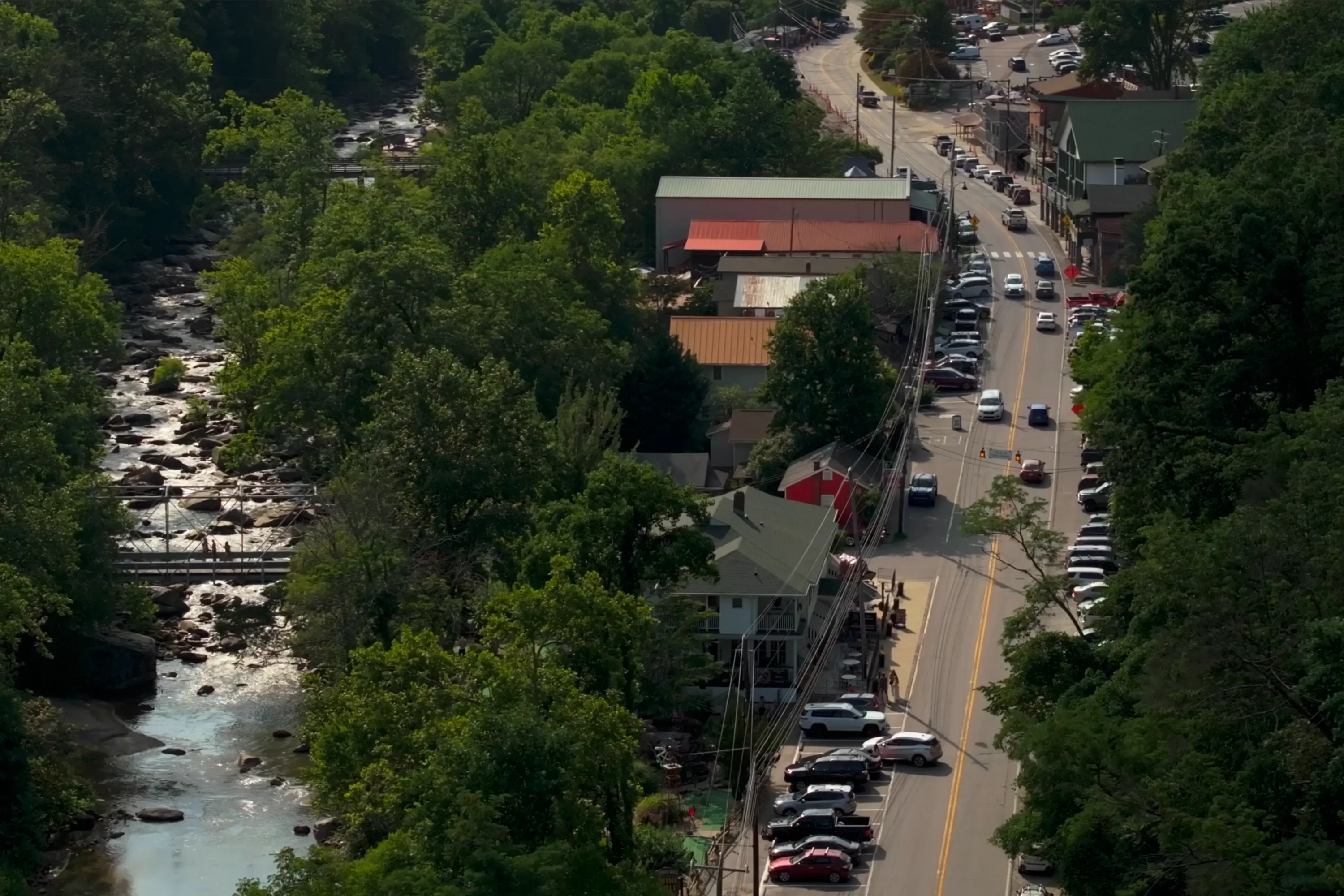
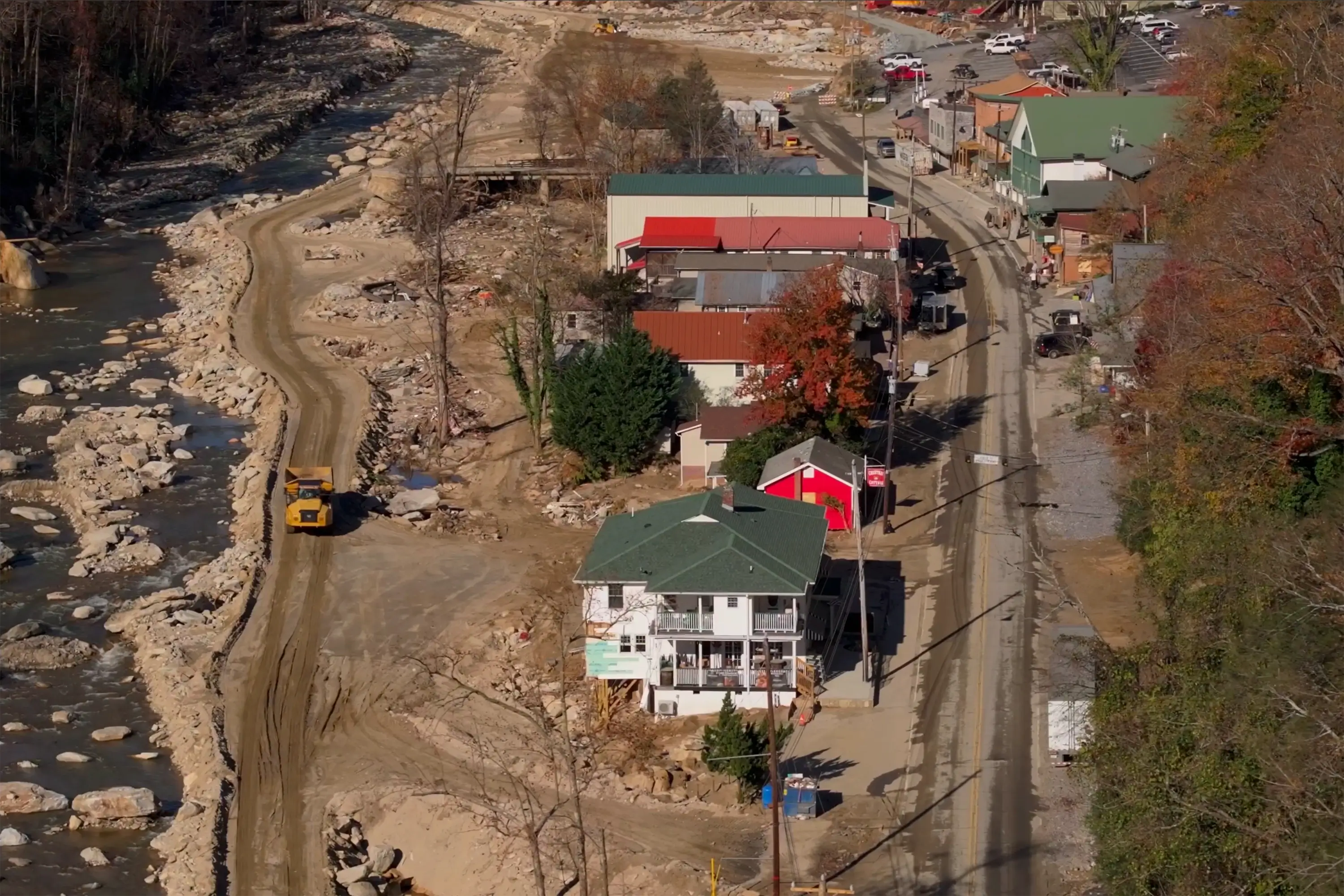
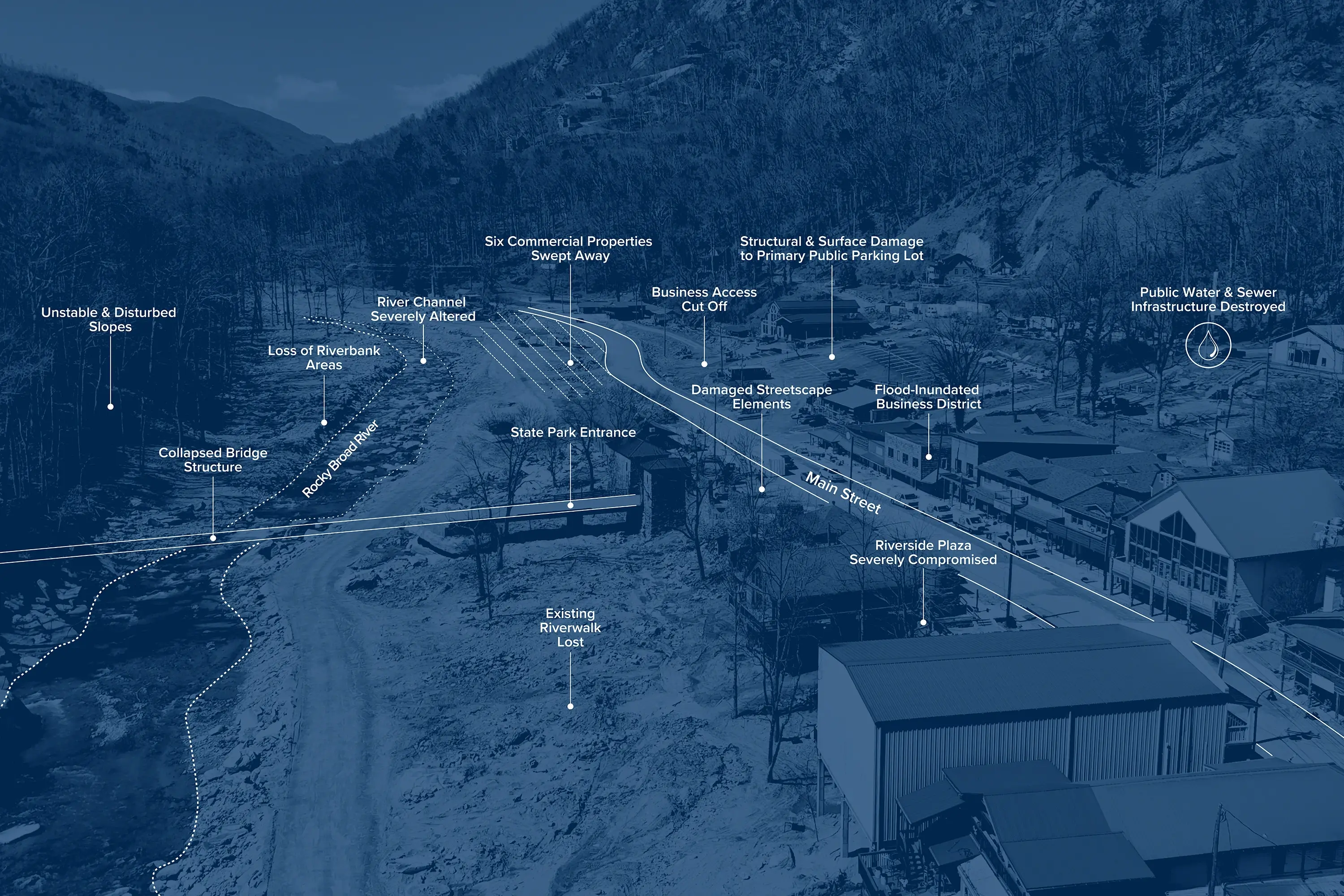
When Hurricane Helene struck in 2024, the damage was swift and severe, ripping the foundations from beneath the Village’s iconic downtown. In the wake of the storm, the Chimney Rock Village Recovery Action Plan was born: a bold, collaborative roadmap to help the community rebuild with resilience, purpose, and care.


Plan Overview
Destination by Design has partnered with Chimney Rock Village for years, working alongside civic leaders, business owners, and residents to bring new life to the town’s core. From early streetscape improvements to construction of the Village Square Plaza, our team has helped implement a multi-phase effort to support long-term growth while maintaining the history and character of the Village. After Helene, DbD helped lead the development of the Recovery Action Plan—offering technical guidance, emotional support, and strategic vision at every step. The result is a recovery strategy rooted in beauty, strength, and a deep understanding of both place and people.
Community Engagement
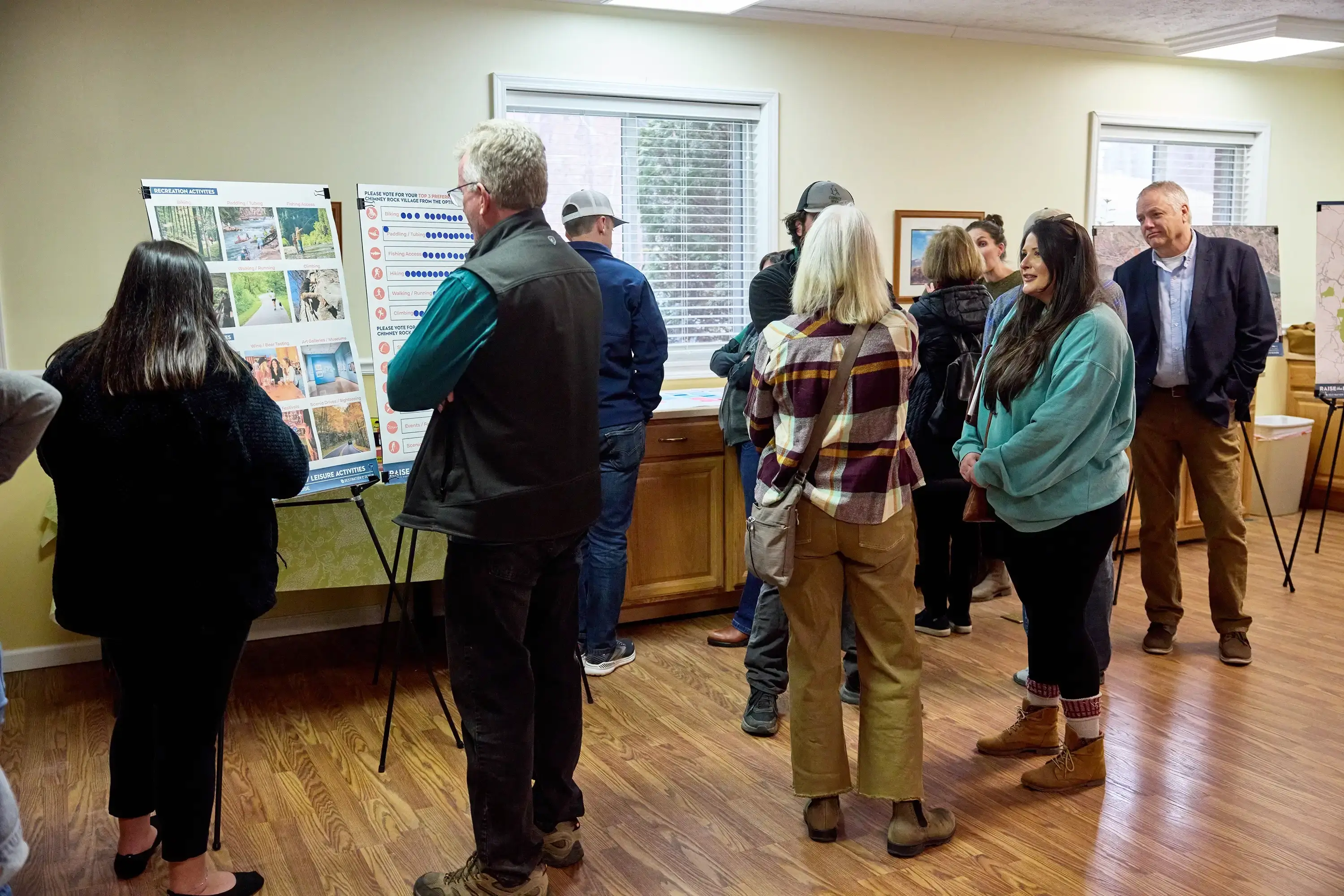
Community engagement is the foundation of our approach and is especially important following a disaster, when residents are reeling from loss and civic leaders are tasked with charting a path forward. In Chimney Rock Village, our team walked the streets with locals to see firsthand the impact of Hurricane Helene. Through focus groups, stakeholder interviews, and personal visits, we created space for meaningful dialogue and collaborative planning.
This gave families, business owners, and elected officials the chance to share their experiences, concerns, and hopes—insights that shaped every phase of our planning and design process. Locals weren’t just consulted—they were co-creators of a vision grounded in the values and character of Chimney Rock Village.
Emotional Support
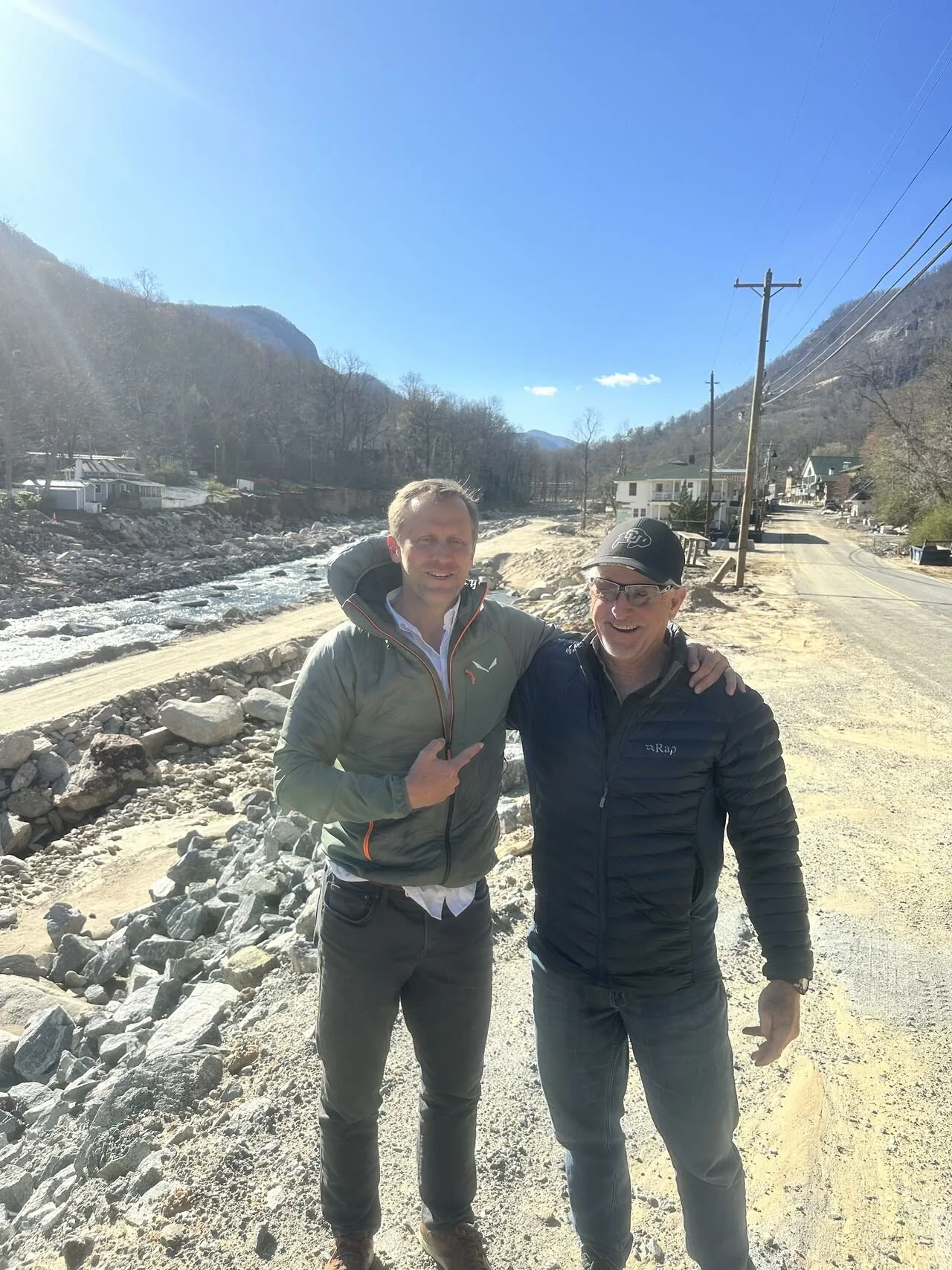
As a firm based in Watauga County—another region in North Carolina affected by Hurricane Helene—we came into this work with a deep awareness of how disaster can leave emotional as well as physical scars. Our team created spaces for community members to process loss, voice frustrations, and begin to envision what healing might look like. By recognizing and validating the emotional realities of recovery, we helped facilitate a collective sense of purpose and forward motion.
Strategic Land Use
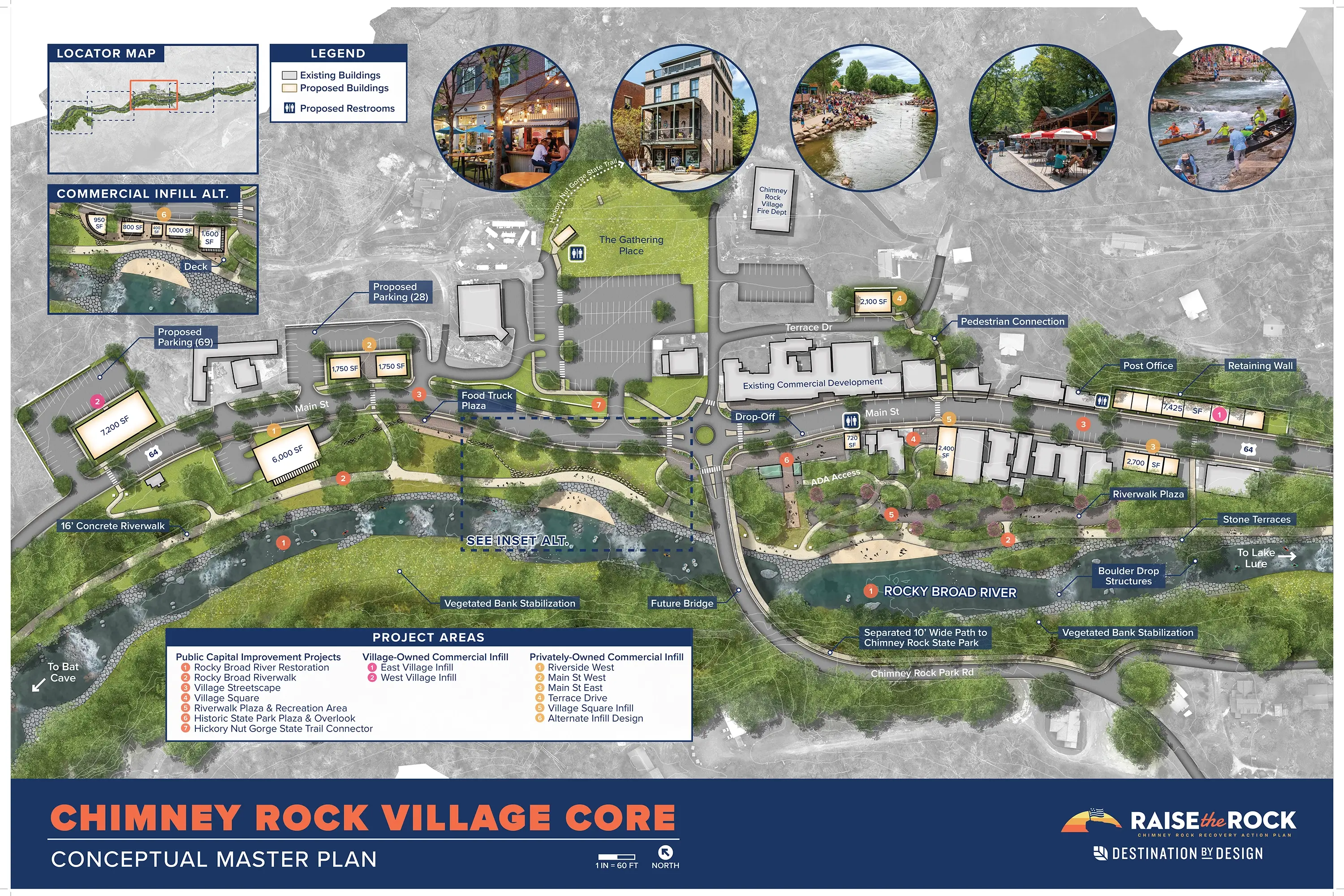
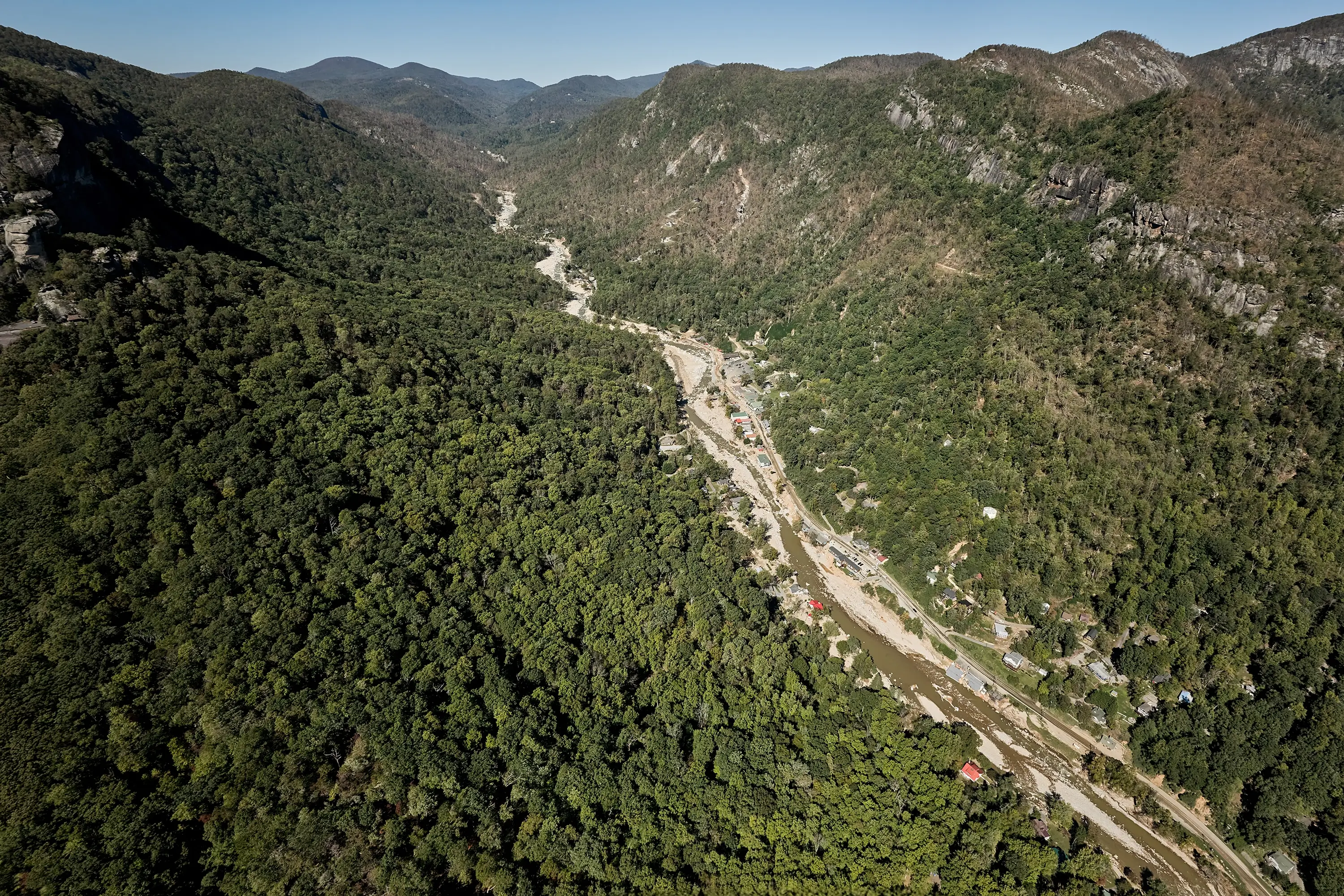
Chimney Rock Village is hemmed in by steep mountains and a wild, scenic river—features that define its charm but limit where and how the community can grow. In a place like this, every acre counts. Destination by Design collaborated with local and state partners to identify public and private properties suited for infill development, potential relocation, and resilience-focused improvements.
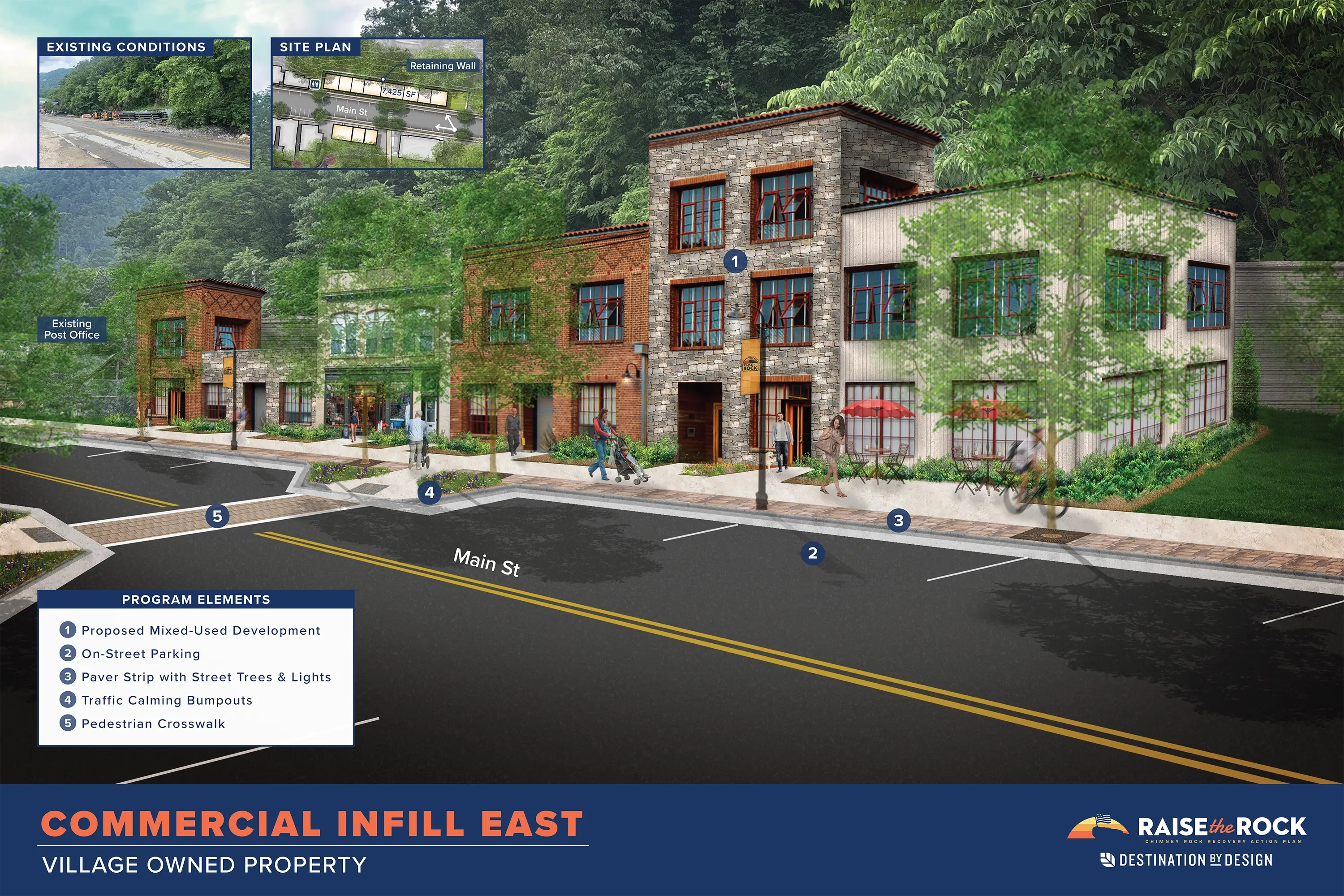
We crafted a land use strategy that looked beyond simply rebuilding. The result is a thoughtful, place-based roadmap that reduces future risk, enhances physical and visual connectivity, and opens the door for long-term economic and community growth—while preserving the natural landscape that makes the Village so distinctive.
Recreation-Based Vision
The Village has long been a cherished destination community in Western North Carolina, known for its dramatic scenery and strong sense of place. The small mountain town is a favorite of returning visitors whose families have vacationed there for generations, and serves as the gateway for Chimney Rock State Park, which draws 400,000 people annually.
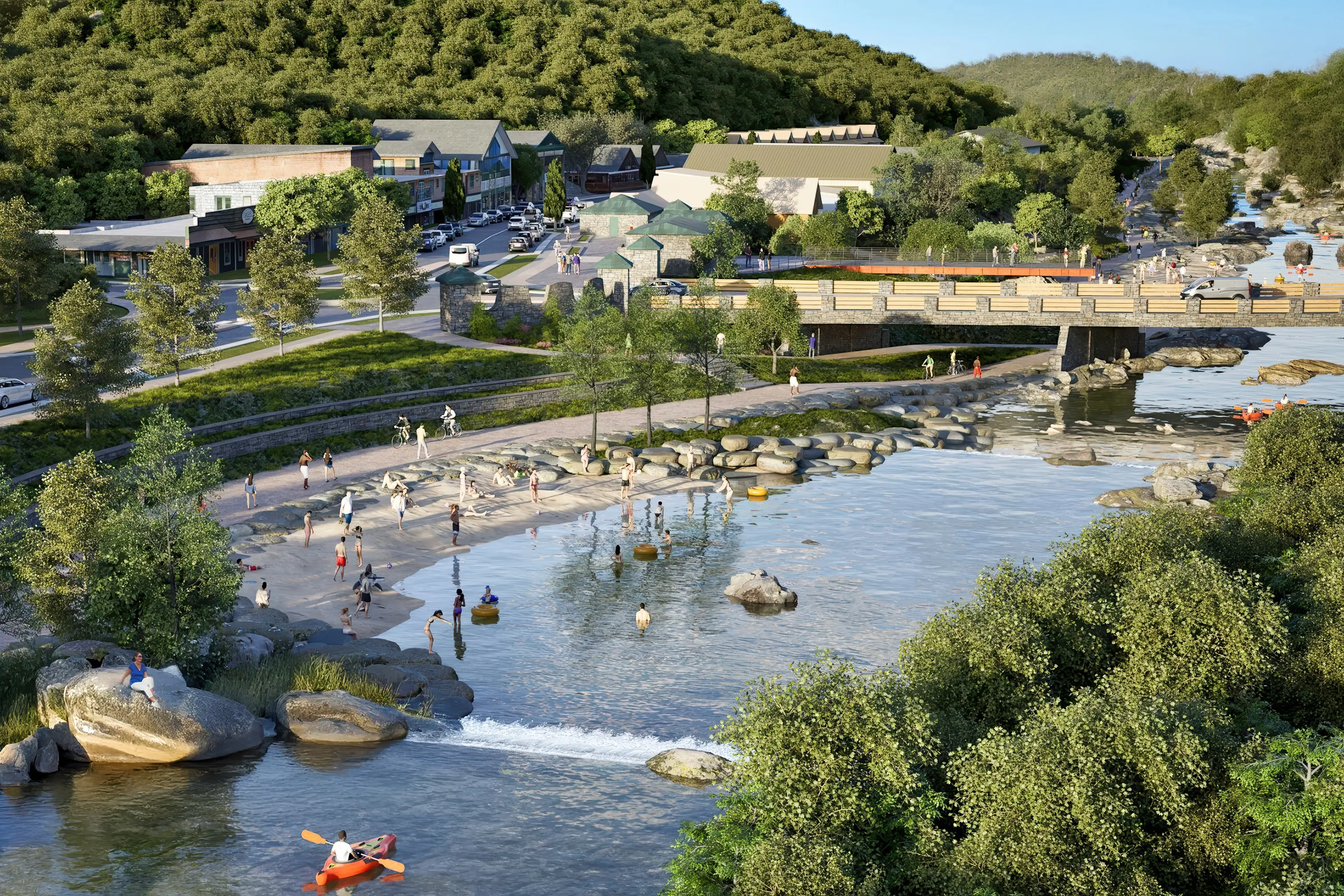
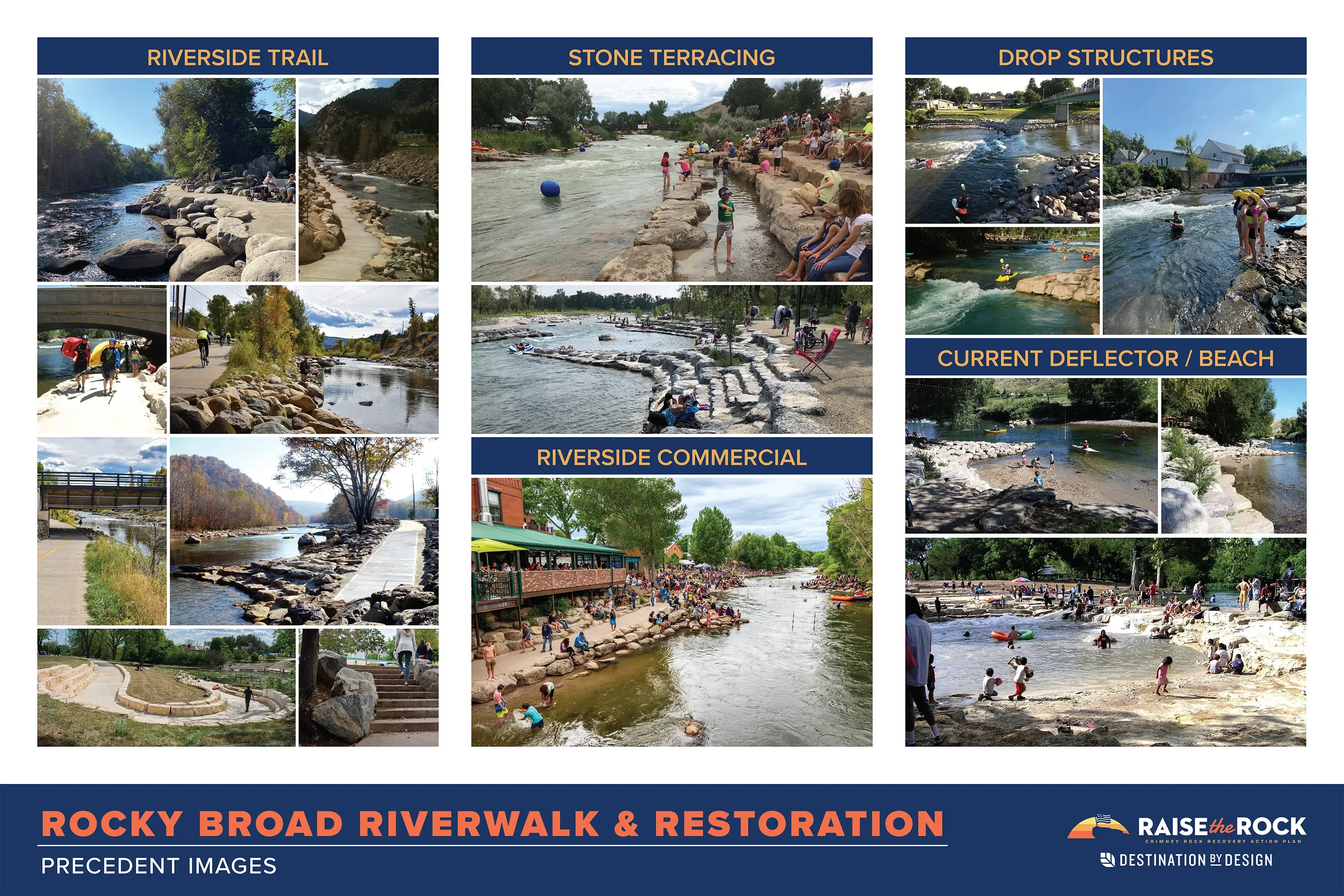
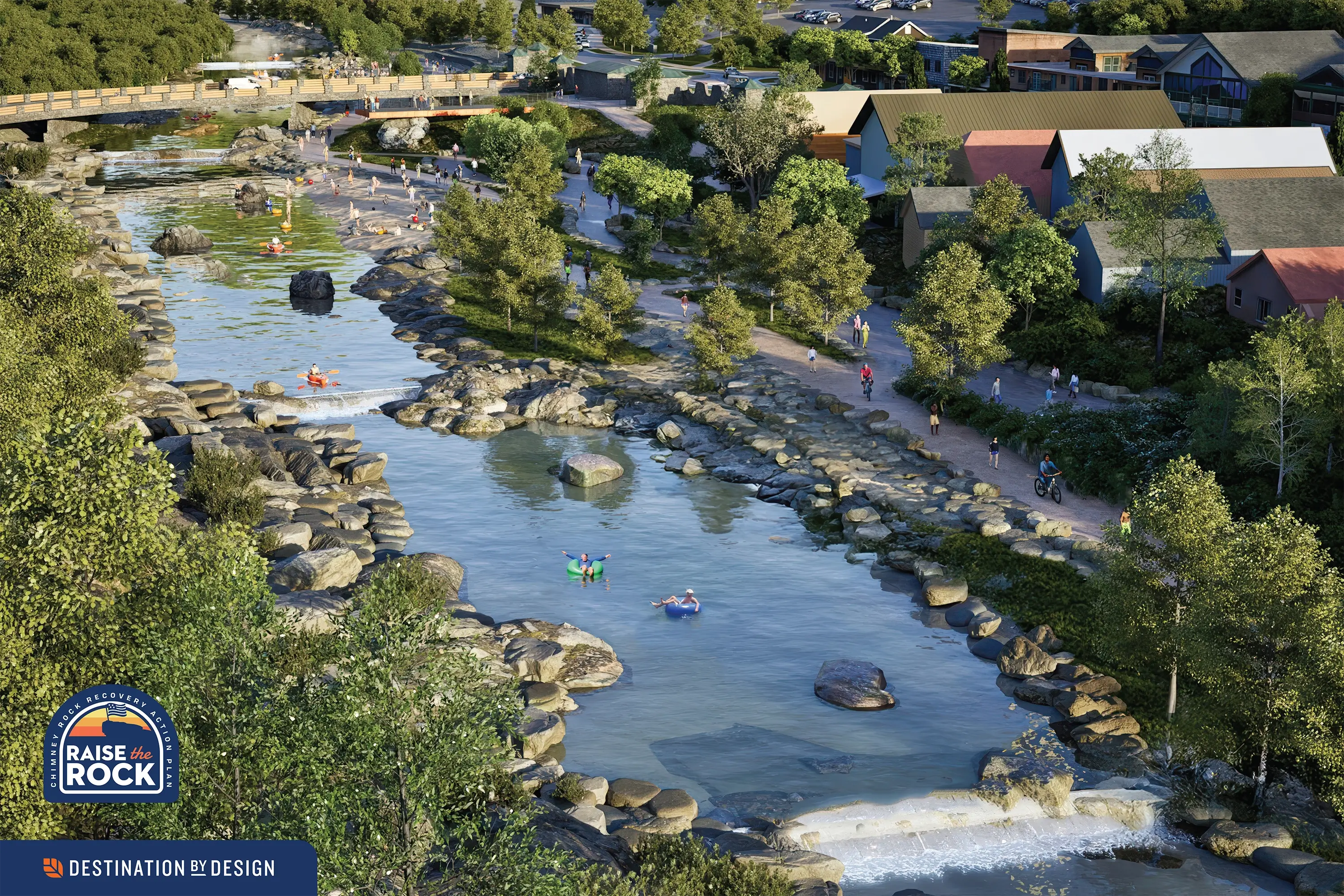
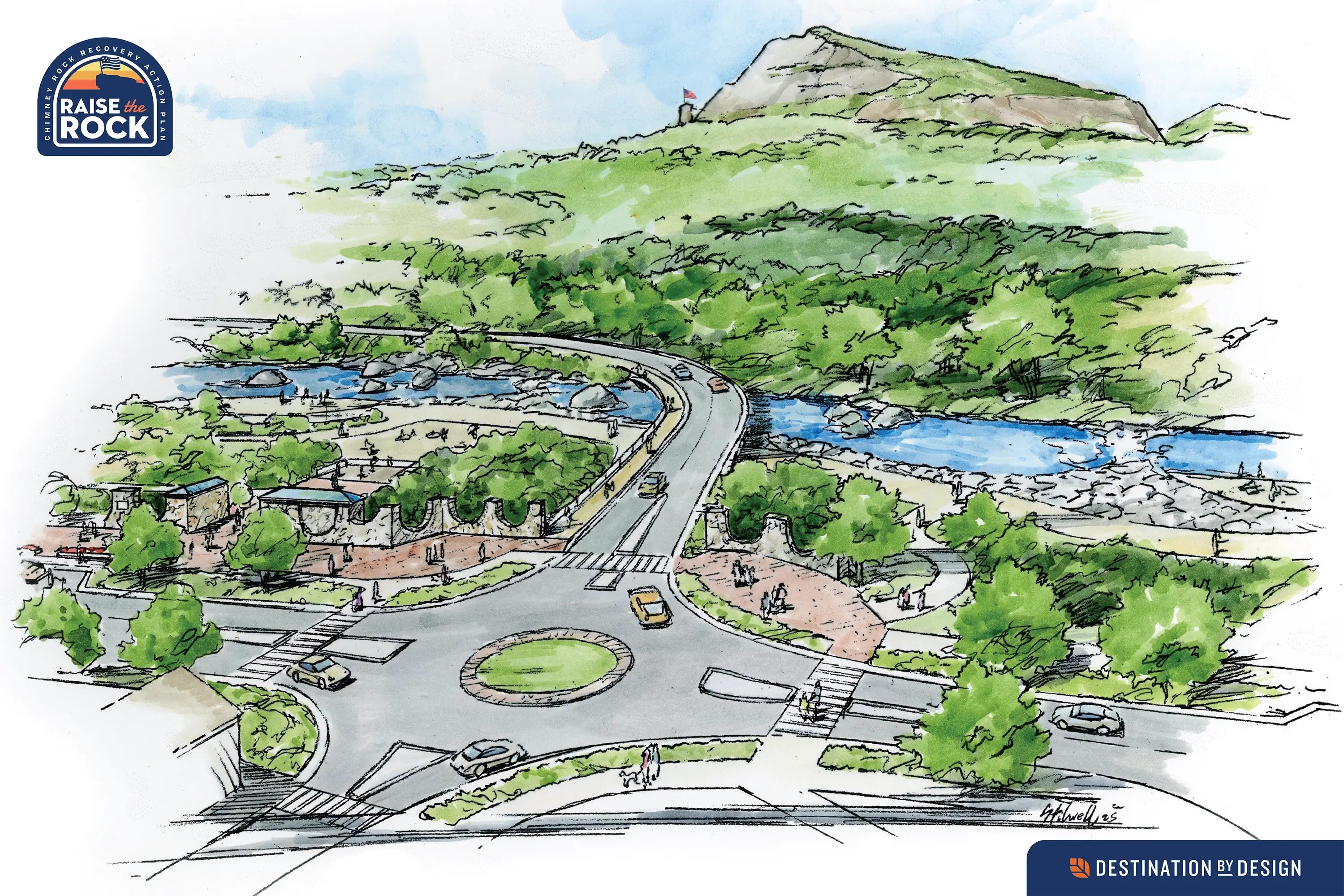
Our recovery plan supports the local tourism economy while prioritizing the needs of residents. A revitalized riverwalk, improved park spaces, and expanded access to outdoor experiences will enhance the visitor experience and help restore the natural landscape. By integrating ecological restoration with public recreation, we created a vision that is both environmentally responsible and economically strategic.

Plan Brand
The branding for the Raise the Rock plan evokes resilience, unity, and forward momentum, using bold typography and the easily recognizable imagery of Chimney Rock State Park. Designed to be both memorable and motivational, the brand serves as a unifying symbol for recovery efforts, galvanizing community support and reinforcing the Village’s identity through every stage of revitalization.

Destination by Design partnered with the Village of Chimney Rock to develop the Recovery Action Plan following the severe damage Hurricane Helene inflicted on the Village’s iconic downtown in 2024. Branded “Raise the Rock,” the plan combines comprehensive land use planning, public engagement, and a dedicated visual identity to guide long-term recovery in a town hemmed in by steep mountains and the Rocky Broad River. Building on years of prior work together, including the Village Square Plaza, DbD helped identify infill sites, relocation options, and resilience-focused improvements suited to the Village’s limited buildable land.
In North Carolina, land use planning and downtown revitalization often come together most urgently after a disaster, when a community must rebuild while still protecting what makes it distinctive. Chimney Rock Village’s recovery plan reflects that pairing, using a strategic land use framework to guide where and how the town can grow, while a revitalized riverwalk and improved park spaces restore the visitor experience that has long defined its downtown core.
Rebuilding after a natural disaster is an opportunity to reduce future risk, not just replace what was lost. Chimney Rock’s Recovery Action Plan was built on that principle, pairing technical land use strategy with deep community engagement, including focus groups, stakeholder interviews, and personal conversations with residents still processing the emotional toll of Hurricane Helene. The result is a place-based roadmap that strengthens the Village against future storms while preserving the natural landscape that draws 400,000 annual visitors to nearby Chimney Rock State Park.
Land use planning is the process of guiding how land within a community is developed, protected, or redeveloped to balance growth, safety, and character. It typically involves site analysis, public engagement, and strategic recommendations for zoning, infill development, and infrastructure. For Chimney Rock Village, that meant identifying suitable properties for rebuilding and resilience improvements in a town severely constrained by steep terrain and a wild, scenic river.
Chimney Rock Village sits within Hickory Nut Gorge in western North Carolina, a one-road mountain town bordered by steep cliffs and the rushing Rocky Broad River. It serves as the gateway to Chimney Rock State Park, a destination that draws roughly 400,000 visitors a year, making the Village’s recovery critical not just for its residents but for the broader regional tourism economy.