At Destination by Design, we partner with EDCs, EDOs, and regional authorities across the U.S. to build websites that support business attraction, workforce development, and community investment. Our services include website design and development, community branding, and digital strategy – built for the unique demands of economic development. Looking to strengthen your community’s competitive position? View services and contact us today.
Your Website Is a Site Selector’s First Due Diligence Tool
Site selectors and corporate real estate teams use economic development websites as a primary research instrument. They’re not browsing casually – they’re evaluating whether your community can meet the workforce, infrastructure, tax incentive, and real estate needs of a specific project. If your site can’t answer those questions clearly and quickly, they move on.
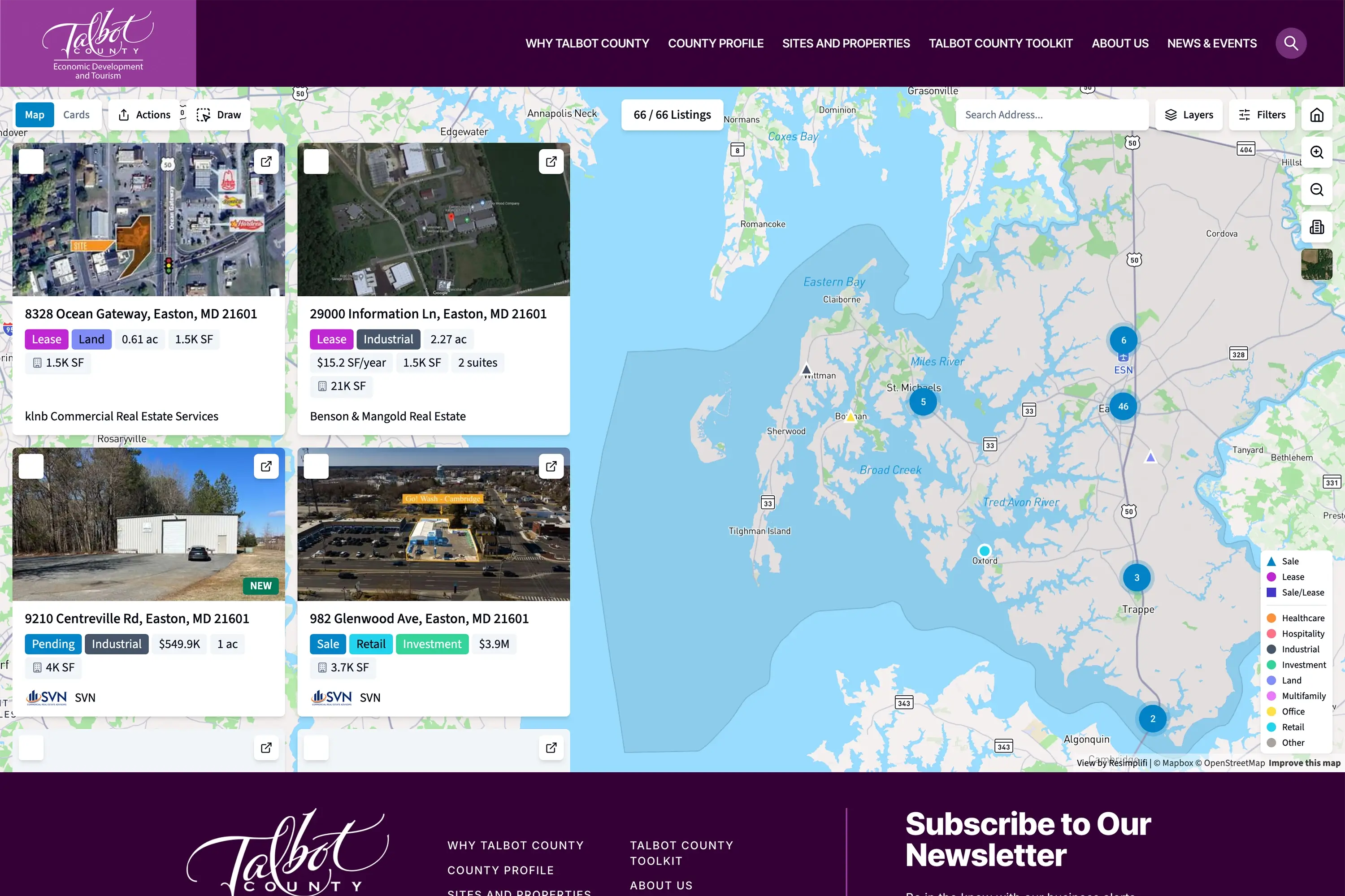
A high-performing economic development website puts data front and center: available sites and buildings, demographic profiles, labor force statistics, incentive programs, and key industry clusters. The easier it is to find that information, the stronger the signal that your community means business.
Economic Impact: Site selectors evaluate dozens of communities for every project. A website that clearly surfaces the right data at the right moment can be the difference between a prospect call and a pass.
Your Brand Must Signal Confidence and Community Identity
Economic development is competitive. Communities across the country are competing for the same projects, the same investment dollars, and the same talent. Your brand – the visual identity, tone, and narrative that runs through your website – needs to differentiate your community and signal that it’s a forward-thinking place worth serious consideration.
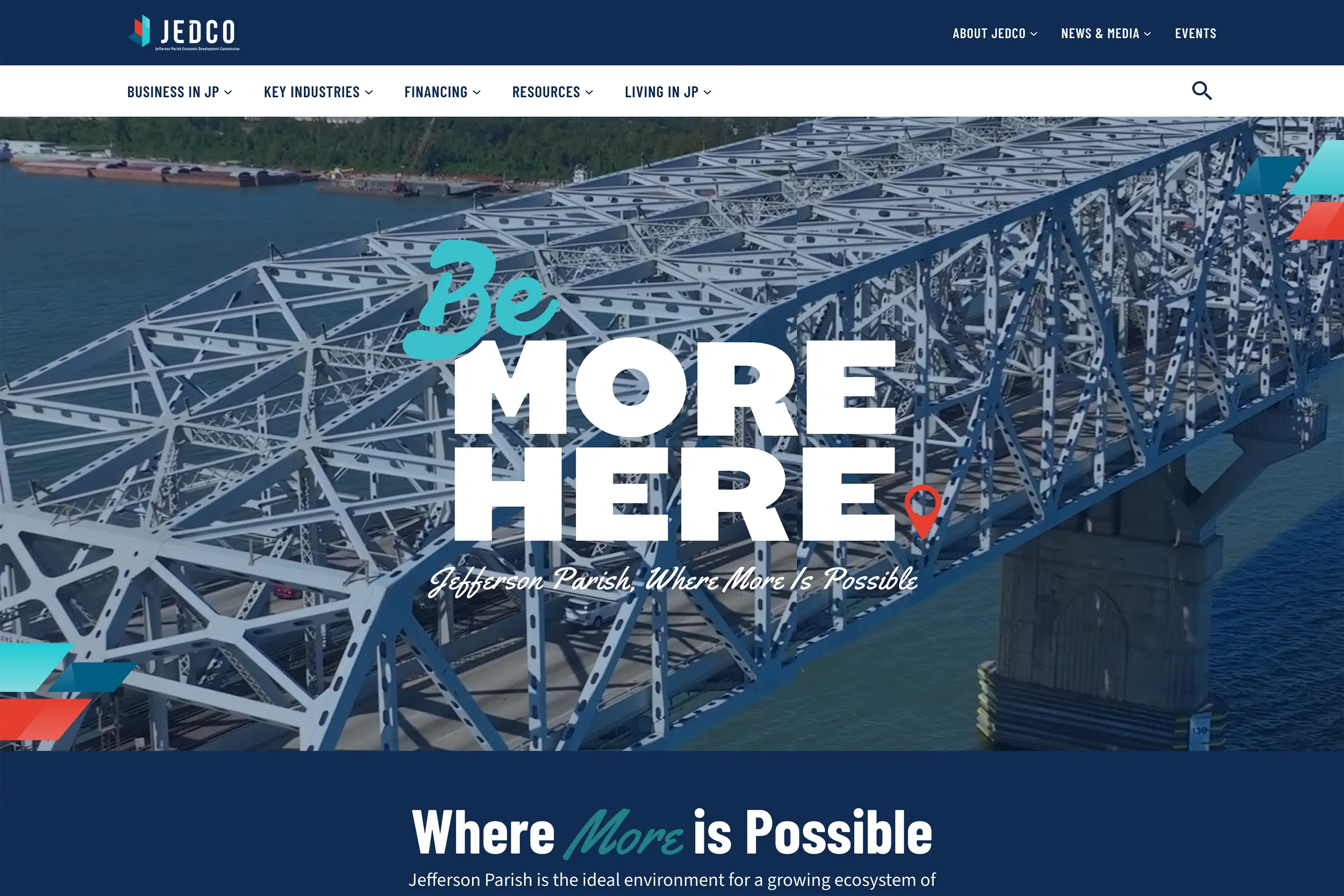
That means developing or strengthening a brand that reflects your community’s actual strengths: proximity to markets, workforce characteristics, quality of life, infrastructure assets, and economic clusters that give businesses a genuine competitive advantage by locating there.
Pro Tip: Your brand should feel as credible to a corporate executive as it does inspiring to a local entrepreneur. Authenticity and professionalism aren’t in conflict – they’re both essential.
Data Presentation Is a Design Problem
Economic development websites are inherently data-heavy – workforce statistics, site availability, incentive details, demographic breakdowns, industry cluster maps. The challenge is presenting all of that information in a way that’s clear, current, and compelling rather than dense and overwhelming.
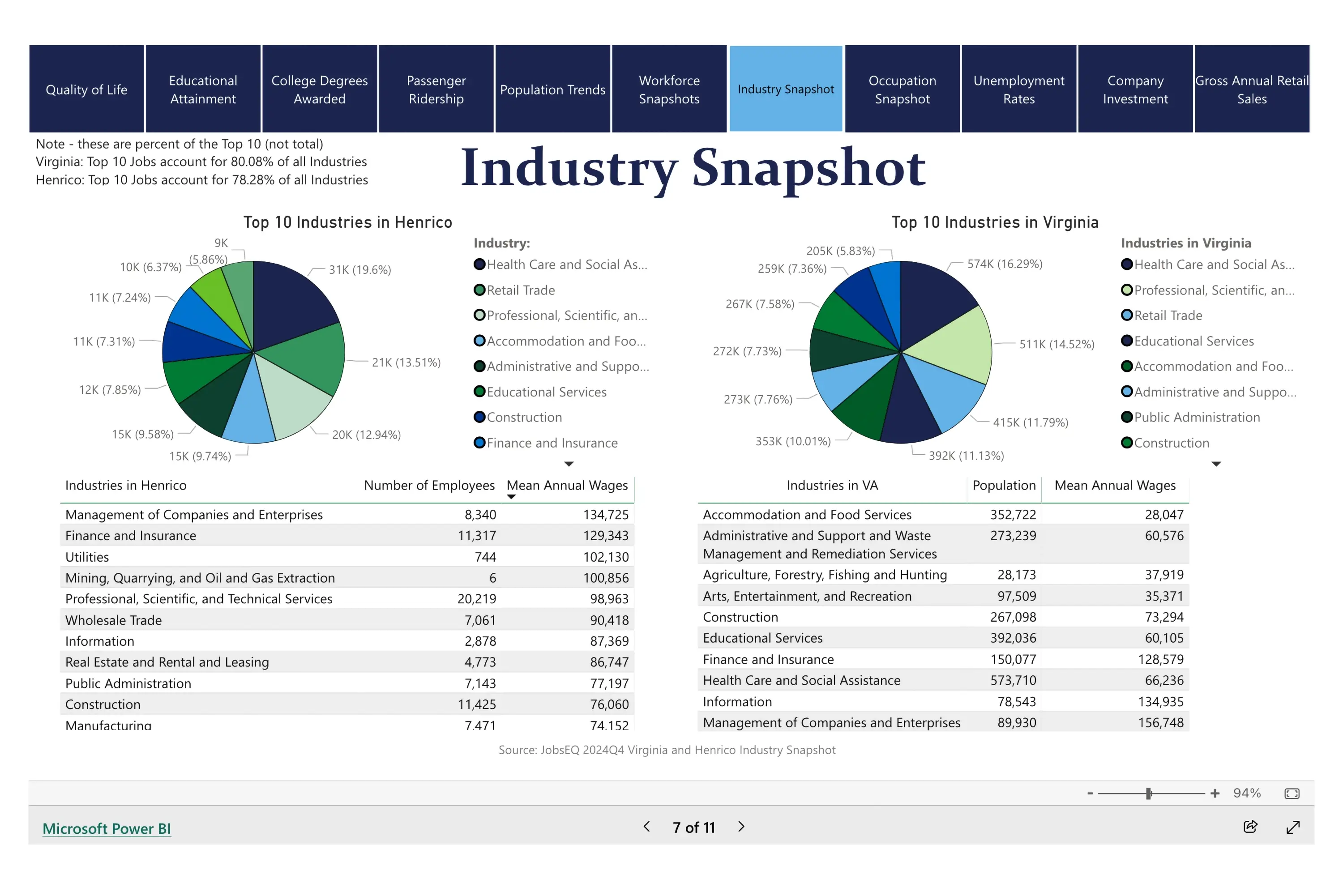
Good data design makes complex information scannable: interactive maps, sortable property databases, downloadable fact sheets, and infographic-style statistics that communicate at a glance. When your data is well-presented, it becomes a selling tool rather than an obligation.
Design Tip: Integrate live data feeds where possible – real-time site availability, current incentive programs, and up-to-date labor market statistics signal that your organization is active and informed.
Available Sites and Buildings Deserve a Serious Digital Experience
A searchable property database is one of the highest-value features an economic development website can offer. Site selectors and developers want to filter by square footage, site acreage, zoning classification, utilities access, proximity to transportation corridors, and market incentive eligibility – all without having to make a specific request.
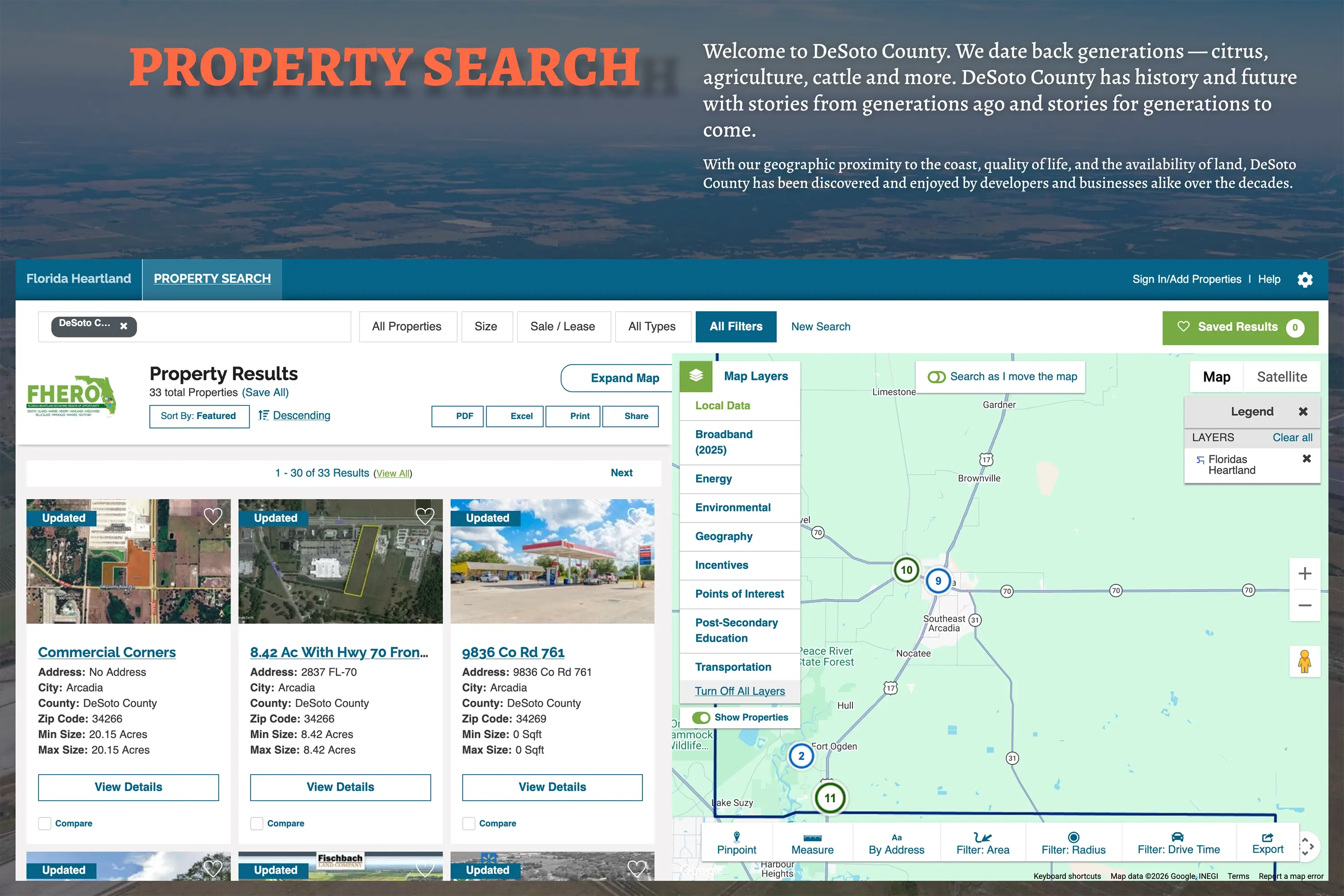
Well-designed property search tools reduce friction for serious prospects and demonstrate that your community is prepared to move quickly when the right project comes along. They also keep your site active and relevant as inventory changes.
Economic Impact: Communities with well-organized, easy-to-navigate property databases consistently outperform those without them in early-stage site selection screenings.
Workforce Storytelling Is as Important as Workforce Data
Labor force statistics matter – but so does the story behind them. Companies relocating or expanding aren’t just looking for headcount; they’re looking for a community that values work, has a pipeline of trained talent, and offers the quality of life that attracts and retains employees.
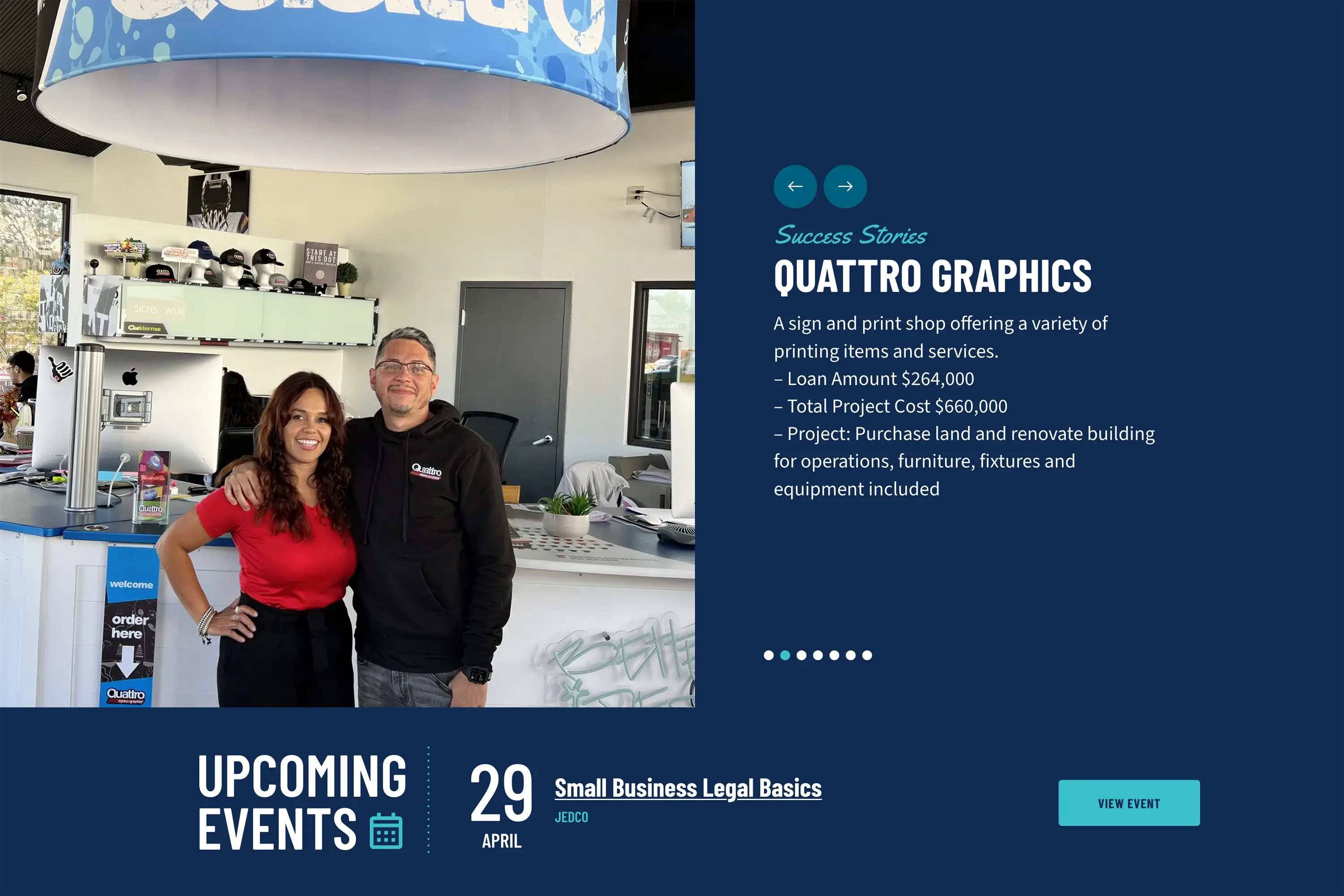
Your website should tell that story: partnerships with community colleges and technical schools, workforce training programs, commute patterns, quality-of-life assets like trails and parks, and the cultural character of your community that makes it a place people choose to live – not just work.
Pro Tip: Combine hard data with human stories. Case studies of existing businesses that have grown in your community are among the most persuasive content you can put on an economic development website.
Local Business Resources Serve the Community You Already Have
Economic development doesn’t stop at attraction. The businesses already operating in your community – the small manufacturers, retail anchors, tech firms, and agricultural enterprises – are also your constituents. A strong website serves them too, with resources for business retention and expansion: financing programs, permit assistance, workforce development partnerships, and access to regional networks.
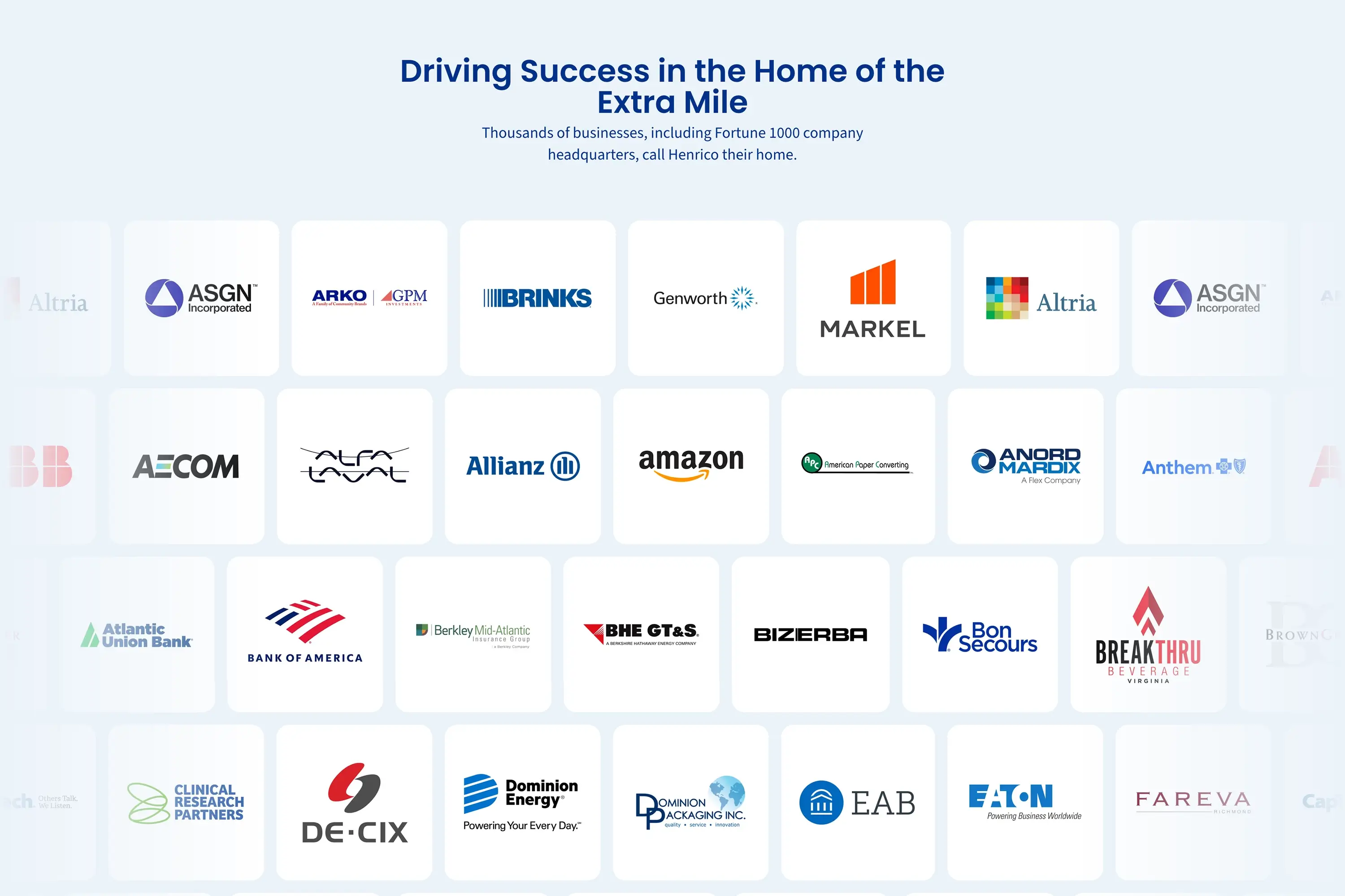
When existing businesses feel supported, they grow, hire, and advocate for your community to their networks. That word-of-mouth is more powerful than any marketing campaign.
When It Comes to Community Investment: Business retention is economic development. A website that visibly serves your existing business community signals to outside prospects that your organization is a real partner – not just a contact page.
SEO and Digital Strategy Put Your Community on the Map
An economic development website that doesn’t rank in search results for relevant queries is effectively invisible to a significant share of potential prospects. Search engine optimization (SEO) isn’t an afterthought for websites; it’s a core part of your lead generation strategy. Key areas to rank in may include “industrial sites in [your state],” “business incentives in [your region],” “workforce training [your city]”.
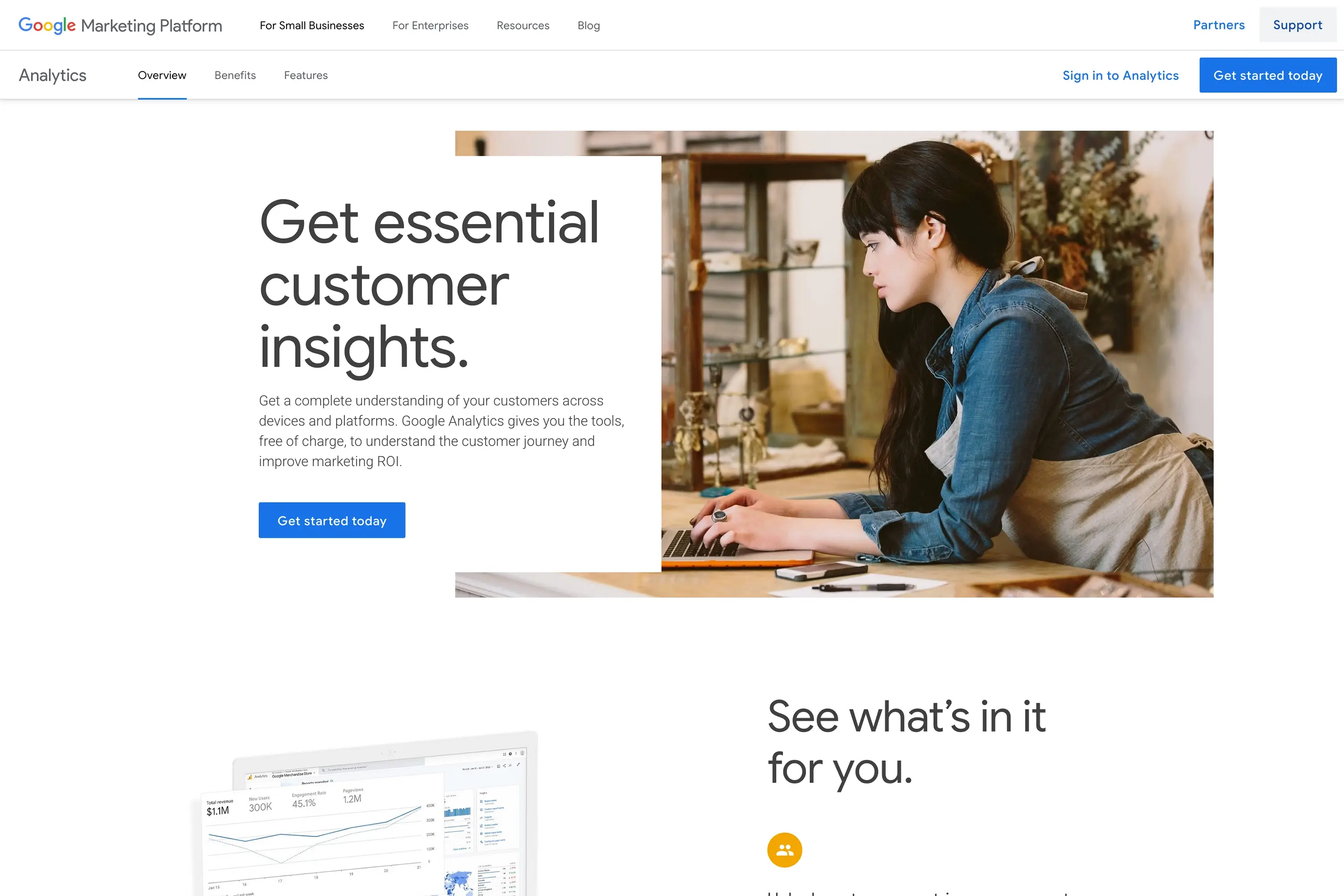
Beyond SEO, a coherent digital strategy means understanding where your target audiences are spending time online and how to reach them – whether through targeted digital advertising, content marketing, LinkedIn outreach, or partnerships with regional economic development networks.
Economic Impact: Your website is the hub of your digital economic development strategy. Every other marketing effort – trade shows, LinkedIn, press releases, broker outreach – should funnel prospects back to a site that’s ready to convert them.
Partner With Experts Who Know Economic Development
At Destination by Design, we understand the unique demands of economic development marketing – because we’ve built digital platforms and community brands for EDCs, EDOs, and regional authorities across the country.
We know what site selectors are looking for, what local entrepreneurs need, and how to design a website that serves both audiences without compromising either.
Let’s talk about building a digital platform that works as hard as your community does. You bring the vision. We’ll build the roadmap.
Request a Proposal
Discover how we can
bring your vision to life.